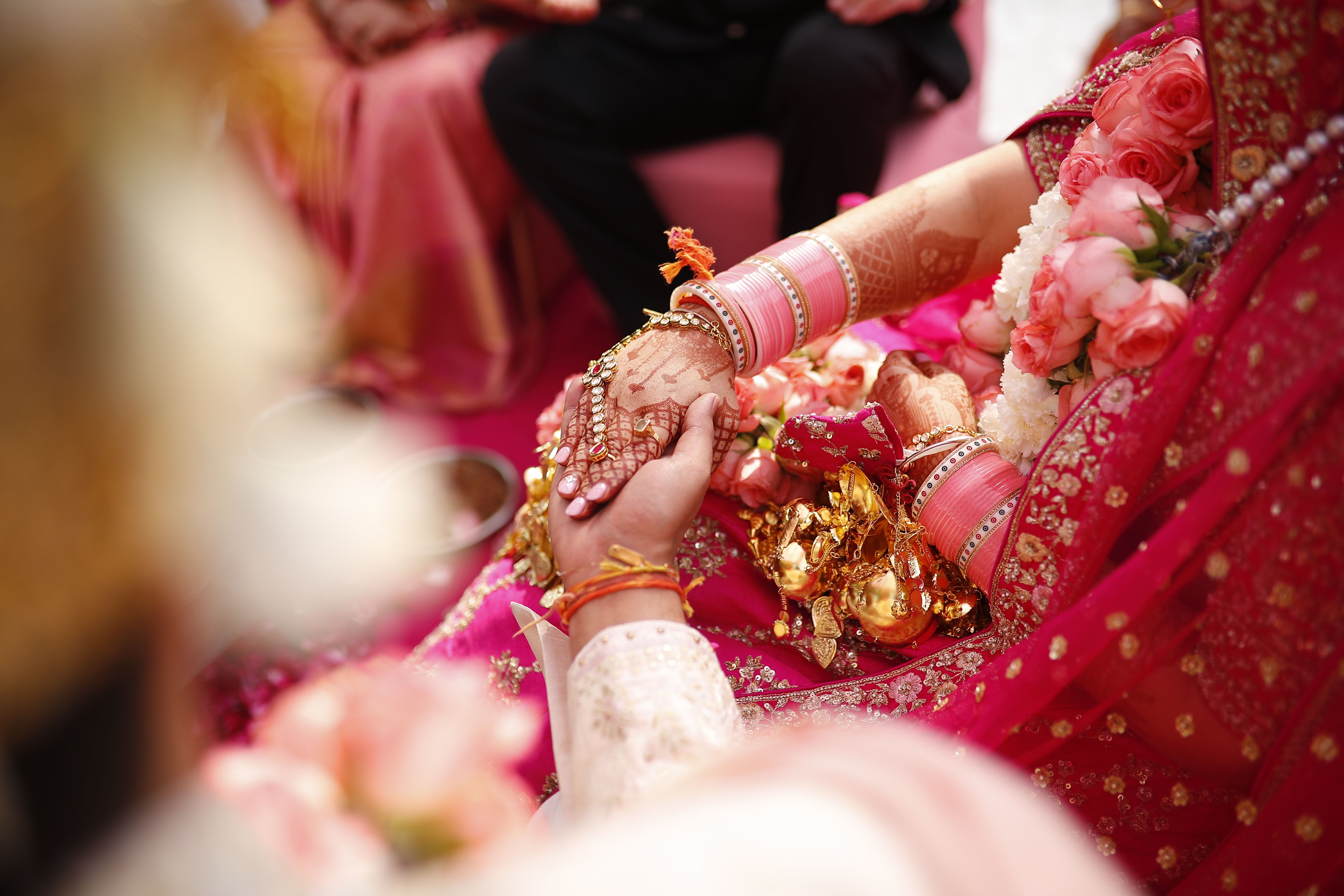
The Indian wedding, for most of the last three decades, has been a stadium event. Five hundred guests. Three venues across three days. Four outfits per key participant. Weeks of preparation and, at the good ones, a professional wedding planner running the whole apparatus. The families involved emerge exhausted, a substantial sum lighter, and often unclear about who most of the guests actually were.
A quieter turn has begun. Some families, thinking honestly about what they want the wedding to have been, are returning to something older: the wedding at home. Not the whole wedding necessarily; sometimes just the mehendi and sangeet at home, sometimes the intimate ceremonies with fifty to eighty guests, sometimes the pheras themselves conducted in the puja room of the family home. This is a small return but a real one, and worth taking seriously.
This essay is about what the home wedding can be, what it asks of the home, and the specific residue it leaves that the hotel wedding cannot.
What the home wedding actually is
A short clarification, because the home wedding is not a single thing. It exists on a spectrum.
At one end, the fully at-home wedding, where all functions from mehendi to reception happen in and around the family home. This is workable for families with substantial home space (a courtyard, a lawn, a terrace) and a guest count of eighty or fewer. It is intimate, deeply personal, and, when done well, produces a wedding that is remembered by everyone involved for its warmth rather than its scale.
In the middle, the hybrid wedding, where the smaller functions (mehendi, sangeet, the family lunch) happen at home, and the larger ceremony and reception happen at a hotel or banquet hall. This is the most common working version, allowing the intimate opening days to remain at home while the larger event moves to a venue that can hold the extended guest list.
At the more compact end, only the key ceremonies (the engagement, the pheras, or a private cocktail) happen at home, as intimate events for immediate family and closest friends, with the rest of the wedding happening elsewhere.
Each version has its logic. The family should decide honestly which shape fits its home, its guest network, and its temperament, rather than defaulting to one because everyone else is doing it.
The guest count question
The home wedding, of any format, is defined more by guest count than by ceremony choice. A short working guide.
Twenty to forty guests. Fits comfortably in most large Indian family homes, using the living room and dining space for meals, the terrace or lawn if available for ceremonies. Requires no special infrastructure. The intimate wedding.
Forty to eighty guests. Fits with some planning. The home needs a substantial ground floor, a small marquee on the lawn or terrace if a ceremony is happening, and clear flow between spaces. The working wedding.
Eighty to one-fifty guests. Possible in homes with substantial outdoor space, or in row houses where the ceremony can spill onto the compound. Requires a marquee, external catering setup, and often a portable restroom for the day. The upper limit of at-home.
Above one-fifty guests, the home wedding becomes very difficult regardless of the home's size. The infrastructure required (parking, restrooms, catering, seating) overwhelms most residential compounds and starts to feel less like a home wedding than a wedding pretending to be one.
The single most useful discipline for the family planning a home wedding is to draw a hard line on the guest count. Every additional twenty guests, past the home's honest capacity, subtracts from the intimacy the family wanted the home wedding for in the first place.
A home wedding, at its best, has the quality that most weddings claim but few achieve: it feels, entirely, like the family's wedding. Not a wedding produced by a planner in a venue owned by a stranger, but a wedding held in the walls that raised the person now being married.
The kitchen challenge
The single biggest logistical challenge of the home wedding is feeding the guests. Most family homes do not have a kitchen capable of preparing food for eighty at once. The family, planning the home wedding, must decide the food logic in advance.
External catering, with the caterer setting up in a temporary kitchen (the terrace, the driveway, a marquee), is the most common working solution. The family selects the menu, briefs the caterer, and steps out of the food question for the day. Good Indian wedding caterers (Neelam Foodland, Kailash Parbat, or smaller regional specialists) can serve eighty comfortably from a temporary setup.
Semi-external, where the caterer brings finished dishes and heats them at the home, with a small on-site cooking layer for the fresh items (rotis, tadkas, hot starters). This works for smaller guest counts and gives the wedding a more home-cooked feel.
Fully home-cooked, with additional cooks brought in for the days of preparation. This works for the truly intimate wedding, where the family wants the food to be the family's own recipes, cooked by people the family trusts. It is more work but produces a specific flavour of intimacy that no caterer can.
Whatever the choice, the family should have decided at least six weeks before, briefed the cook or caterer, and tested the menu at least once before the wedding day.
Parking, seating, flow
The unglamorous logistics that determine whether the day works.
Parking. In most Indian residential areas, parking eighty cars is impossible on the street without cooperation from neighbours. The family should either work with a nearby lot or club, brief the neighbours a week in advance, or arrange guest transport (a shuttle from a nearby meeting point) as part of the invitation.
Seating. The Indian wedding traditionally seats guests on the floor (for the ceremony) and at buffet-style tables (for the meal). The home wedding should decide whether it wants formal chairs and tables (needing significant space) or floor seating with cushions and low tables (more intimate, needs less area).
Flow between functions. The home wedding often has multiple things happening in sequence in the same space (the mandap that becomes the dining area, the terrace that shifts from morning tea to evening sangeet). The family should walk through the day's flow at least once in advance, thinking through what has to be moved, cleaned, or reset between each transition.
Restroom capacity. Eighty guests over four hours will use restrooms substantially more than the home's two bathrooms can handle gracefully. For larger home weddings, a portable restroom unit (available for rent in most metros) becomes non-negotiable.
The residue: what the home wedding leaves behind
A note on why the home wedding matters, beyond the logistics.
The hotel wedding, when it is over, is over. The venue is cleared. The next couple's decoration goes up. The family returns to a home that has no memory of the day.
The home wedding leaves residue. The mandap, dismantled, was in the living room. The pheras took place in the space the newlywed will visit for the rest of their life. The mehendi was applied in the courtyard where the bride played as a child. The room where the bride got ready is the room she grew up in. The guest who visits, five years later, walks through the same space and remembers the wedding.
This residue is not a small thing. It is, in fact, one of the deepest things a wedding can produce: the marriage integrated into the fabric of the family home, the ceremony held in the space where the family has lived and will continue to live. Twenty years later, the child of the newlywed can be told the wedding was in this exact room, and the room is still there to be shown.
The longer view
The home wedding is not the right choice for every family. Some families genuinely want the scale of the banquet event and would not enjoy the intimacy of the home version. Some families do not have the home space to host at any workable count. Some families are dispersed and need a neutral venue for a wedding that draws from multiple cities.
But for the family that has been considering the banquet hall by default, and quietly wishing the wedding felt more personal, the home wedding is worth considering seriously. Not as a retreat from ambition but as a different kind of ambition: the ambition to hold a wedding that will be remembered for its warmth, not its scale.
The Indian home has, for centuries, been the place where the family's significant events happened. Births, deaths, festivals, and yes, weddings. The last generation moved these events out of the home and into commercial venues, for reasons of scale and convenience. The current generation, thinking again about what the home is for, is finding that the older way had things to teach us that the newer way had forgotten. The home wedding, quietly returning, is one of those things. And the home that has hosted a wedding is, forever after, a home that carries the wedding within it. That is what the ceremony was always for.