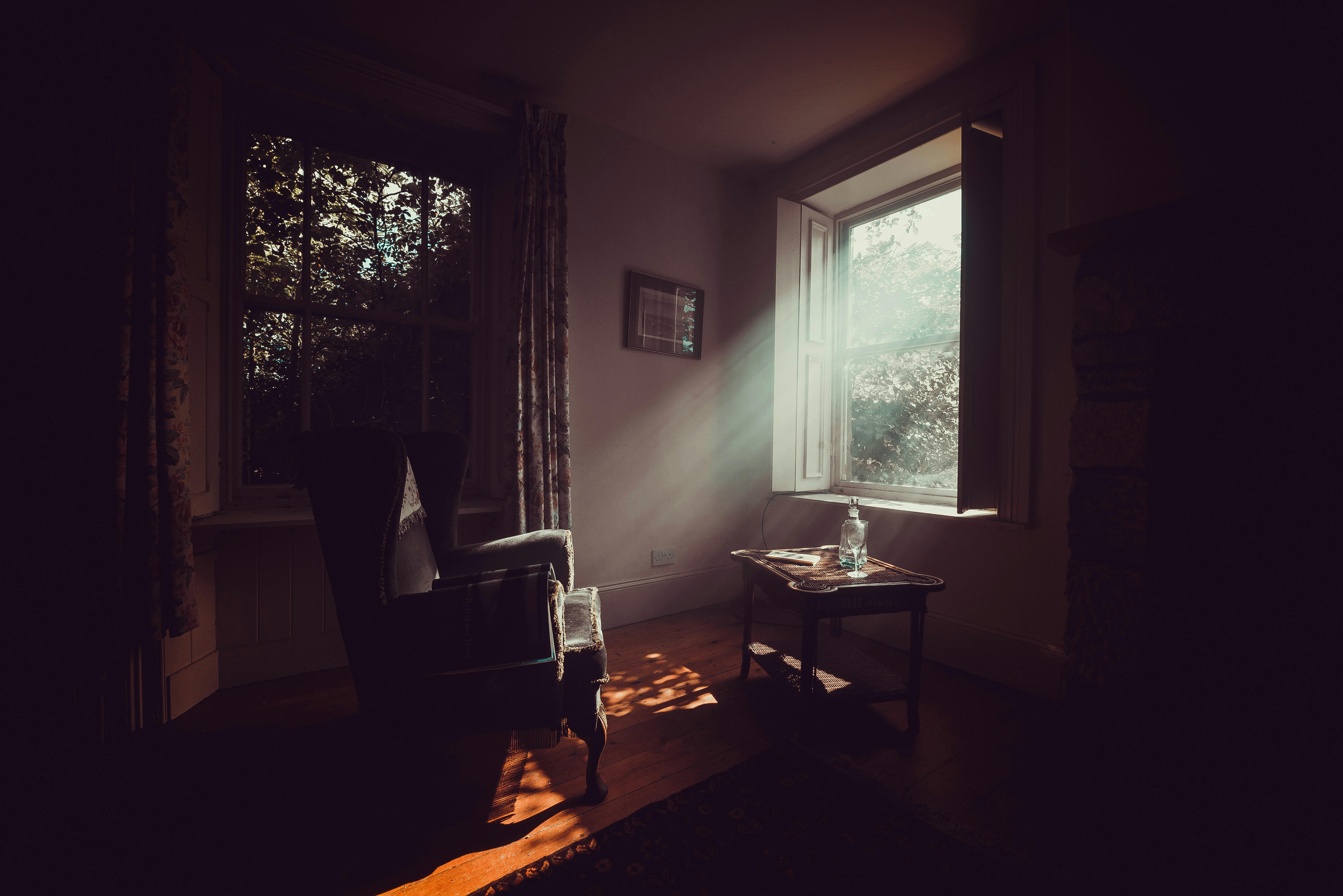
The Indian home, over the last thirty years, has quietly turned inward. The curtains are drawn against the heat in the morning and the dust in the afternoon. The air conditioning runs from nine in the morning to midnight, keeping the interior climate stable and comfortable. The lights are on for most of the waking hours, providing the illumination that natural light no longer reaches. The household lives, for most of its indoor time, in a lit box that has been sealed off from the actual day outside.
This is comfortable. The Indian summer, the Delhi winter, the Mumbai monsoon, are all more manageable indoors than outdoors, and the technology of climate control has made indoor comfort universal. The trade, though, is worth naming. The household that has sealed itself against the outside has, in the same act, sealed itself off from daylight. And daylight, it turns out, is not just illumination. It is one of the fundamental signals the body uses to organise itself.
This essay is about the discipline of restoring some of the daylight relationship that Indian homes have quietly lost. Not as a return to pre-air-conditioning discomfort, but as a small deliberate practice that fits alongside modern comfort.
Why daylight matters
A short visit to the biology, because most Indians have not been asked to think about daylight as anything other than illumination.
The human body operates on a circadian rhythm, roughly a twenty-four-hour cycle of hormone release, alertness, digestion, and sleep. This rhythm is not self-sustaining; it needs a daily signal to stay synchronised. The primary signal is bright light in the morning, specifically the blue-white spectrum of natural daylight, which suppresses melatonin, raises cortisol, and tells the body that the day has begun.
The household member who spends the first four hours of their day in dim artificial light, without natural sunlight exposure, has a circadian rhythm that is not being fully cued. The body knows something is off but cannot say what. The result, over months and years, is fragmented sleep, mid-afternoon energy crashes, mood dysregulation, and, in more serious cases, seasonal affective symptoms that most Indians do not associate with themselves but which are, in fact, present.
Beyond circadian rhythm, natural daylight provides vitamin D synthesis (particularly important in Indian populations, which are widely deficient), regulates mood through serotonin production, and provides the specific spectrum of light that indoor artificial sources cannot match. None of these can be replaced by more lamps.
The household that has been living in constant indoor light is not doing something fatal. It is, however, doing something suboptimal, and the small changes are worth making.
The Indian home's specific daylight problem
A short acknowledgement of the real constraints, because the case for daylight has to be honest about why Indian homes have moved away from it.
Heat. The summer sun in most of India is punishing. Windows facing south or west, opened to full daylight, will make a room uncomfortable within hours. Curtains and blinds are not a design preference; they are a survival tool.
Dust. Indian outdoor air, particularly in the winter months in northern cities, carries a substantial dust and pollutant load. The home with open windows accumulates this on every surface, requiring far more cleaning than a sealed home.
Air quality. Between November and February, air pollution in north Indian cities is, on many days, actively harmful. Opening windows is not just a comfort question; it is a health question.
Glare. The Indian midday sun produces harsh glare that makes reading, working on screens, and general indoor activity difficult. Curtains during the peak sun hours are practical rather than optional.
Any argument for daylight discipline has to work with these constraints, not against them. The point is not to open every window at every hour. The point is to identify the specific windows of the day when daylight can enter without penalty, and to use them.
A home that has been closed against the sun for climatic reasons is doing sensible work. The question is not whether to open it more; it is whether the household can find the specific hours when opening is both comfortable and biologically useful. Those hours exist. Most households have stopped noticing them.
The morning window
The most important daylight window for circadian purposes is the first hour after waking. This is when the body most needs the bright-light signal to fully synchronise. In Indian conditions, this window is also, conveniently, when the sun is at its most manageable.
A working practice. Within the first fifteen minutes of waking, the household member steps out onto the balcony, the terrace, the garden, or the doorway that faces the morning sun. Ten minutes of exposure to actual outdoor daylight, even in ambient shade, is enough to meaningfully cue the circadian system. Direct sunlight on the skin (safely, for a few minutes) adds the vitamin D component.
For households where stepping out is not practical, the alternative is to open the curtains fully in at least one main room during the morning hours (six to nine in most of India), and to spend that time in the room with the curtains open. The morning sun through the window is a weaker signal than direct exposure but is still meaningfully better than nothing.
This single practice, sustained, is the largest single daylight intervention available to the Indian household. The household that has installed it reports, within weeks, better sleep, easier mornings, more stable mood through the day.
The afternoon retreat
A short concession. The afternoon in most of India is when the home should be at its most closed. The direct sun is punishing, the heat is at its peak, the dust is at its heaviest, and the household is right to draw curtains and run the air conditioning.
The interesting point, however, is that the afternoon retreat is a natural thing. The Indian tradition, before air conditioning, was for households to slow down in the afternoons, to rest, to nap, to move through the home's cooler internal rooms rather than its sun-facing outer ones. The afternoon retreat is not a modern imposition; it is a rediscovery of older Indian rhythms that make sense in the specific climate.
The household that has organised its day around this: bright active mornings, quiet retreated afternoons, active early evenings, is closer to the natural human rhythm in Indian conditions than the household running full activity through the whole day against the climate.
The evening reopen
After the afternoon peak passes, roughly by four or five in the afternoon in most of India, the outside becomes more livable again. The wind picks up. The heat drops. The evening light softens.
This is the second daylight window, and it matters. The evening light in the golden hour before sunset provides a specific spectrum that cues the body toward the evening's wind-down and eventual sleep. The household that has been closed all day and remains closed through the evening loses this signal.
The practice is simple. In the evening hours, open the curtains and, if possible, the windows. Turn off some of the indoor lights and let the natural evening light dominate. Sit near the window with a book or a cup of tea. Even thirty minutes of this exposure, done consistently, helps the body prepare for the night.
This is also, in some sense, the most pleasant hour of the Indian day, and the household that has been shutting itself in against it has been missing something the climate is, at that hour, freely offering.
Zones of daylight through the home
A small design note. The home does not need every room to have the same relationship with daylight.
The morning-light zones. The rooms facing east or northeast should be the ones the household inhabits in the morning. The kitchen for breakfast, a reading corner, the balcony for the first cup of chai. These rooms should have thinner curtains that admit morning light freely.
The afternoon-shade zones. The rooms facing south or west should be the ones the household retreats to in the afternoon. The bedroom for the nap, the study for the quiet work hours. These rooms should have heavier curtains and better ventilation.
The evening-light zones. The rooms facing west or northwest catch the softer evening sun. The living room, if it faces this way, is the ideal evening room. Its curtains should be opened deliberately in the late afternoon and evening.
The household that has organised its daily use around these zones, rather than treating every room identically, has more daylight in its life without any additional discomfort. This is the discipline in the essay's title. Not a struggle against comfort, but a small daily attention to which room the household should be in at which hour.
The longer view
The household that has installed even a light version of the daylight discipline (morning exposure of ten minutes, evening reopen for thirty minutes) finds, within a month or two, that something has shifted. The sleep is deeper. The mornings arrive with more energy. The afternoon crash is less severe. The mood through the day is more stable.
These are not dramatic changes. They are small daily improvements that compound over months and years. The person who has been sleep-deprived, mood-flat, and slightly off for the last decade often does not realise how much of it was, in fact, a chronic circadian misalignment caused by too little natural light. The person who restores the daylight relationship, and only then feels the difference, becomes a small advocate for the practice.
The deeper point, however, is philosophical. The Indian home, historically, was in continuous dialogue with the day outside. The angle of the sun, the movement of the shadows across the courtyard, the different quality of light in each of the day's hours were part of daily life. The modern sealed home has ended this dialogue. The daylight discipline is, in some small way, the beginning of restoring it. Not for aesthetic reasons, though the aesthetic returns. For the older and simpler reason that a home is meant to be a place a body lives well in, and a body lives well in dialogue with the sun. The household that has found even a small way back to that dialogue is, in the end, giving itself something the sealed home cannot.