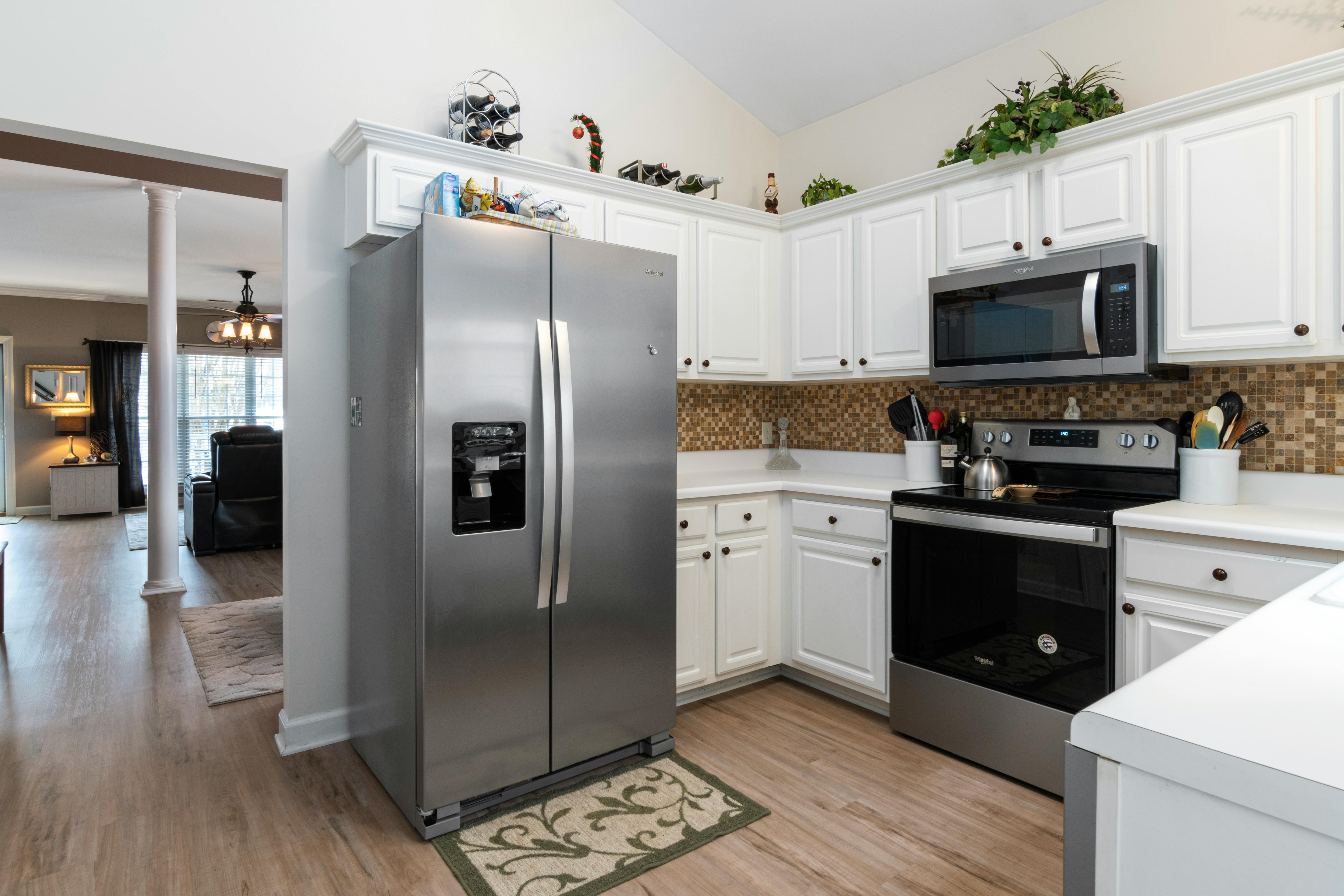
The Indian household of the 1980s had one refrigerator. A Godrej or a Kelvinator, single-door, small by current standards, standing in the kitchen. The household ran on its capacity: what could be stored fitted inside it; what could not was bought fresh that day. This was not a hardship. It was simply the shape of Indian domestic life.
The Indian household of 2026, at the wealthier end, often has two refrigerators. The main one, now large and double-door, in the kitchen. The second one, sometimes a deep freezer and sometimes a second full-size fridge, in the utility area or on the service balcony. Some homes have a third: a wine fridge in the dining area, or a small under-counter ice-maker at the bar.
This essay is about the second fridge specifically. What it holds, why it appeared in Indian kitchens, whether it is justified, and the small honest question the household should ask itself before installing one.
Why the second fridge appeared
A short history of a change most households have not thought about consciously.
Bulk shopping changed the calculus. The rise of large-format supermarkets (D-Mart, Reliance Fresh, Nature's Basket) in the 2000s, and then the online grocery services (Big Basket, Blinkit, Zepto) in the 2020s, made it possible and cheap to buy in larger quantities. The household that previously bought vegetables for two days at a time began, over years, to buy for a week or more.
Freezer culture arrived. The Indian household historically froze very little. Frozen peas were a novelty. Frozen parathas were unimaginable. Frozen non-veg was for restaurants. Somewhere in the last twenty years, freezing became normal: ready-to-cook frozen foods, frozen bread, frozen berries, frozen ice cream tubs, frozen leftover masala bases.
Entertaining scaled up. The Indian household that hosts twenty guests once a month has meaningfully more food storage need at the time of the party than the average day. The second fridge became the buffer for hosting: pre-prepped ingredients, extra cold drinks, dessert holding, the day-before prep.
Seasonal buying became possible. Mangoes in bulk in summer, orange season pickups, the annual pickle and jam production. All of these need more cold storage than the main fridge can provide during the season.
The main fridge got fuller. As families kept more categories of food refrigerated (nuts, oils, some spices, opened packages), the working capacity of the main fridge shrank. Something had to give.
The second fridge is, in effect, the sum of these small shifts. Each is individually understandable. Together, they have produced a doubling of the household's cold storage.
What the second fridge actually holds
A short honest audit, because most households have not looked closely at what they are actually storing.
In the deep freezer version, most commonly. Frozen non-veg in bulk, bought at wholesale rates and portioned. Frozen prepped ingredients: chopped ginger-garlic, onion pastes, tamarind pulp. Ice, in various forms. Frozen homemade items: chapati dough, wet masala bases, pesto, coconut chutney. Bought frozen items: peas, corn, mixed vegetables, frozen fruit for smoothies. Ice cream and desserts, mostly for entertaining. Leftover festive food that will be consumed over the next month.
In the second refrigerator version. Bulk vegetables that overflow from the main fridge. Cold drinks in quantity: bottled water, beer, wine, mixers, soft drinks. Fruits and salads for entertaining. Dahi in bulk. Pickles and preserves in production. The dry inventory that needs cool storage but not daily access.
This is, in aggregate, real usable inventory. The question is not whether the second fridge is holding something; it usually is. The question is whether that something is worth the electricity, the space, and the doubling of the appliance the household is now managing.
The second fridge is not, in itself, wrong. What is worth examining is whether it emerged because the household's life genuinely required it, or whether it emerged because the household's consumption expanded to fill the additional space, and the fridge became the excuse rather than the solution.
The energy cost
A short note that is often overlooked. A refrigerator is one of the most energy-intensive appliances in the home, running continuously twenty-four hours a day for its entire life.
A modern 5-star rated large fridge consumes roughly 300 to 400 units of electricity per year. At current Indian electricity rates, this is between two and five thousand rupees per year, per fridge. A deep freezer or older second fridge often runs less efficiently, adding another three to six thousand rupees annually.
Over a ten-year life, the second fridge represents about fifty to seventy thousand rupees in electricity alone, plus the appliance cost of thirty to sixty thousand. This is the real cost of the second fridge, before any consideration of the food inside.
A more consequential number, however. Refrigeration is a substantial component of household electricity use, and refrigerators are among the least discretionary loads (they run whether occupied or not). The household concerned about its energy footprint, either for environmental or cost reasons, would be right to think of the second fridge as a meaningful load.
When the second fridge is genuinely justified
A short honest list.
Large households. A joint family of eight or more, cooking three meals a day, has real cold storage needs that a single fridge cannot meet without daily overflow.
Regular entertainers. The household that hosts twenty or more guests at least once a month, and produces substantial home-cooked food for each, uses the second fridge for prep buffer and hosting inventory.
Households with substantial home production. The family that makes its own pickles, jams, and preserved foods in seasonal batches has real storage needs for the production process.
Rural or remote households. Homes far from daily grocery access genuinely need larger buffer storage than urban homes.
Households with young children on specific dietary requirements. Some children with allergies or medical conditions need specific frozen ingredients kept aside; these can justify a small dedicated freezer.
Households with medical storage needs. Some medications, some insulin protocols, some prepared medical foods require dedicated cold storage.
For any of these, the second fridge is a working piece of infrastructure, not an accumulation.
When it is just accumulation
For the household that does not fit the categories above, the honest question is worth asking. The second fridge, in the average metro two-adult-plus-child household, often exists because the space was there and someone recommended one, not because the household's food consumption pattern required it.
A useful diagnostic. Open the second fridge. When was each item put in? If half of what is inside was placed there more than three months ago and has not been touched since, the second fridge is functioning as extra storage rather than active inventory. Half of it will, in fact, be discarded uneaten.
The household in this situation has a small honest choice. Either right-size the food practice (buy less, use fresher, cook to what fits in the main fridge), or continue running the second fridge with awareness that it is a lifestyle choice rather than a necessity.
The wine fridge, briefly
A short note on the third appliance that has appeared in wealthier Indian homes.
A dedicated wine fridge holds wine at a stable serving temperature (around 12-15 degrees Celsius), which is warmer than a standard fridge and cooler than room temperature. It is genuinely useful for households that serve wine regularly and want it at proper temperature.
The honest question is whether the household serves enough wine to justify it. A household that opens a bottle of wine a week can perfectly well store it in a cool cupboard and chill white wines in the main fridge for thirty minutes before serving. The wine fridge starts to justify itself at higher consumption or in households with wine collections of any real size.
For the household that has installed a wine fridge and rarely uses it, the appliance sits there running continuously as a small monument to an entertaining style that never materialised. This is not tragic; it is worth noticing.
The longer view
The Indian household has, in one generation, gone from one refrigerator to sometimes three. This is a real material change, and worth examining consciously rather than accepting as the natural evolution of things.
For some households, the additional cold storage is fully justified by the way they actually eat and entertain. For many others, the second fridge emerged because the option existed and no one asked whether it was needed. In either case, the household benefits from having the conversation once, honestly, about what its cold storage actually is for.
The deeper question, however, is not really about fridges. It is about the household's underlying relationship with buying, storing, and consuming food. The one-fridge household of the 1980s bought fresh, cooked to what was on hand, and produced almost no food waste. The three-fridge household of 2026 buys in bulk, freezes for later, and discards a meaningful portion of what it acquires. The second fridge is not the cause of this shift; it is the consequence. The household that has understood this can hold onto the second fridge if it genuinely serves the life the household lives, or return, in some small way, toward the older practice of buying and cooking closer to what will actually be eaten. Either is honest. What is worth avoiding is the drift into a second fridge whose real function is to hold what would otherwise not have been bought at all.