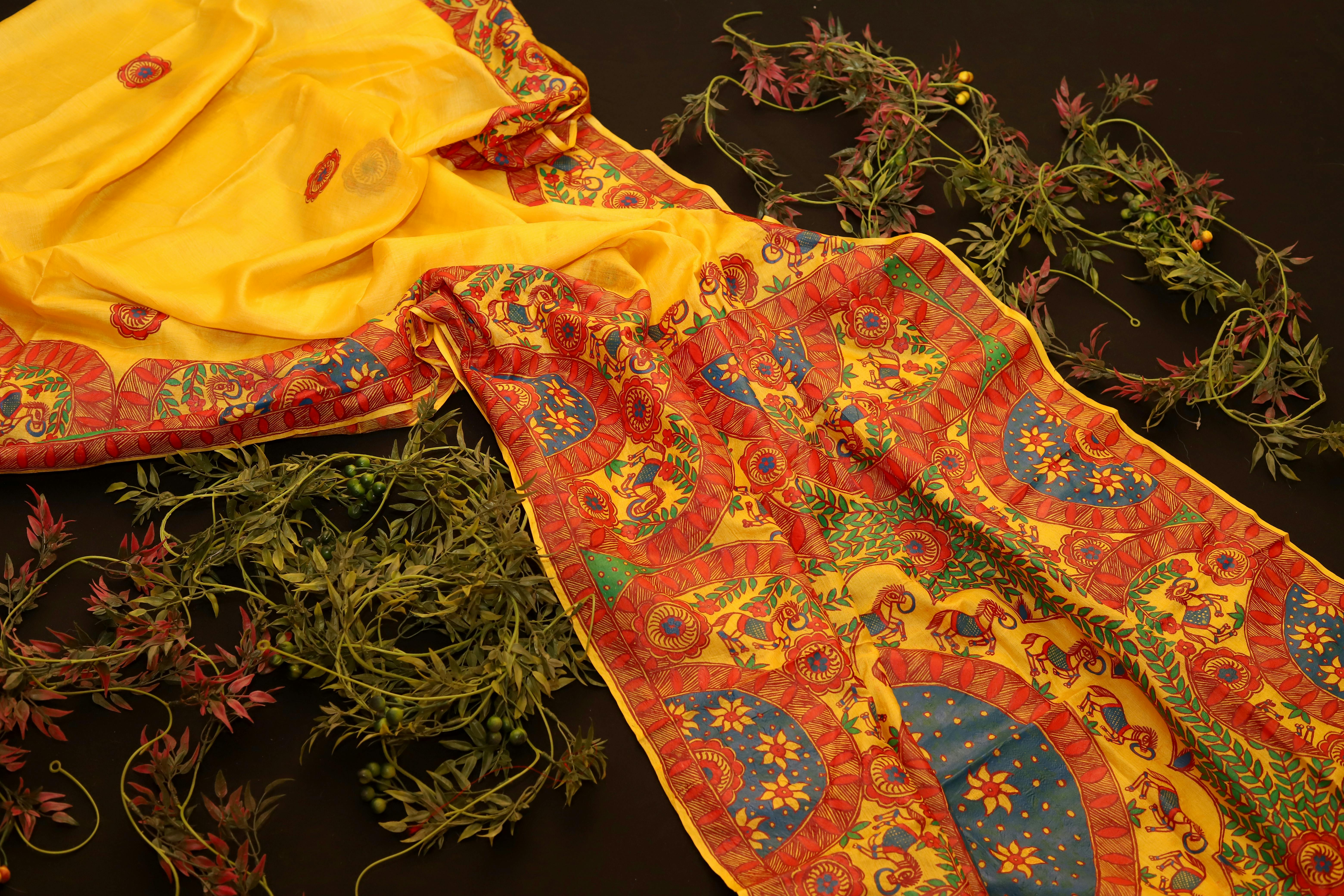
The silk saree, bought for the daughter's wedding fifteen years ago, worn once at that wedding and twice in the years since, is now, on inspection, yellowed at the folds. The pashmina from Kashmir, worn one winter and wrapped in tissue for the next summer, has small holes in its corners. The wool suit that came back from the Delhi tailor in October and was worn through winter, put away in April, has developed a faint mildew during the monsoon.
These are all silent failures. The fabrics have been damaged not by wear but by storage, in the specific conditions of Indian climate. The household did not do anything wrong on any particular day; the fabrics simply have needs that the average Indian storage practice does not meet, and the damage accumulated invisibly across seasons.
This essay is about the care that silk and wool require in an Indian home. It is more specific than a general laundry essay, because silk and wool are more particular fabrics than cotton, and Indian conditions are more hostile to them than the climates they were originally designed for.
Why silk and wool suffer here
A short taxonomy of the problem.
Silk was originally developed in and for temperate climates: China, later Europe, later the northern parts of the subcontinent. It is a protein fibre (like human hair) and shares many of hair's vulnerabilities: it degrades under direct sunlight, weakens when repeatedly folded at the same lines, absorbs and holds smells, and is particularly vulnerable to alkaline substances (including sweat and most Indian soaps).
Wool is more forgiving than silk in some respects but has its own vulnerabilities. Moths, specifically the larvae of clothes moths, feed on wool. Humidity encourages mildew growth in stored wool. Direct sunlight fades wool colours over time. Wet wool, if not dried properly, shrinks and stiffens irreversibly.
The Indian climate is unfriendly to both fabrics in several specific ways. High humidity for large parts of the year, in monsoon and coastal regions, promotes fungal and bacterial growth on protein fibres. High temperatures accelerate chemical degradation. The moth population is substantial and active for many months. Direct sunlight, when it reaches stored fabrics, is intense enough to bleach and weaken them within days.
The upshot is that silk and wool in Indian conditions require actively more careful storage than they would in Europe or northern China. The household that treats them like it treats cotton is quietly damaging them.
The four enemies
A short summary before the specific practices.
Humidity is the primary enemy. Both silk and wool absorb moisture from the air; extended high humidity promotes fungal growth and, in wool, encourages the fibres to swell and mat.
Moths, specifically the small silverfish-like clothes moths (not the larger household moths, which do not damage fabric), lay eggs in wool. The larvae eat the fibres, producing the small holes that appear over storage seasons.
Sunlight, direct or indirect through windows, breaks down the pigment and the fibre structure of both silk and wool. A silk saree hung on a hanger in a room with morning sun will show visible fading within a season.
Hangers, specifically the wrong hangers, distort the shape of silk and wool garments over storage months. Wire hangers, thin plastic hangers, and hangers with sharp shoulder points stretch the shoulders of stored garments permanently.
Every practice that follows is, in some sense, a response to one of these four enemies.
The silk saree and the woollen shawl, in most Indian homes, are simply stored where the cotton is stored. This is one of the small quiet reasons why so many of the beautiful fabrics inherited from a previous generation now show damage. Silk and wool are not cotton. They ask for their own kind of care.
Silk storage: the specifics
A working practice for the silk saree, silk kurta, silk lehenga.
Never store silk in a plastic bag or plastic cover for extended periods. Plastic traps moisture and does not allow the fabric to breathe. The silk saree wrapped in the plastic cover it came home from the shop in, then left in the cupboard for a year, will show fungal spotting when unwrapped.
Wrap silk in acid-free tissue paper or in a cotton bag. Both allow airflow. The tissue paper protects against light damage; the cotton bag prevents accidental contact staining. Muslin sari covers, available from any good sari retailer, are ideal.
Refold silk every six months if it will be stored long-term. The permanent creases that develop from long storage at the same folds weaken the fibre at those lines; refolding at different points prevents this. A large silk saree, refolded twice a year, will last decades. The same saree left in the same fold pattern for five years will develop crease damage.
Store silk in dark, dry cupboards. Not in cupboards that get direct light. Not in cupboards with damp issues. The internal shelves of a wooden cupboard in the interior room of the home, protected from external walls, are ideal.
Silica gel packets, replaced every six months, in the cupboard help absorb humidity. Cheap and effective.
Do not store silk touching wool. The moth-repellent oils sometimes used on wool storage can stain adjacent silk over time. Keep the two categories in separate sections.
Wool storage: the specifics
For the wool suit, the wool saree, the pashmina.
Wool must be cleaned before extended storage. The oils, sweat, and small particles that a wool garment picks up during wear are what attract moth larvae. A wool garment that was dry-cleaned before storage is at meaningfully lower risk than one stored dirty.
Store wool with a moth repellent. The traditional option is naphthalene balls; these are effective but strong-smelling and now often replaced with cedar wood blocks, which last two to three years and produce a milder scent. Lavender sachets are pleasant but only mildly effective; cedar is more reliable.
Cotton bags, again, are the right storage cover. The wool suit in its dry-cleaner's plastic bag is at higher risk than the same suit in a breathable cotton bag.
Check on stored wool every few months during the off-season. If moth damage is starting, catching it early prevents the small holes from becoming large ones and prevents the infestation from spreading to other pieces.
For very valuable wool pieces (the pashmina, particularly), a vacuum-seal bag once a year, at the end of the winter season, prevents most storage damage entirely. The bag removes air, which removes the environment moths need. The wool inside sits protected for months.
The Kashmiri pashmina, specifically
A short note on the fabric that most rewards careful storage and most punishes casual storage.
A genuine Kashmiri pashmina is made from the fine undercoat of the Changthangi goat and is one of the most delicate wool fabrics in existence. Individual fibres are meaningfully thinner than merino wool, and the fabric is correspondingly more vulnerable.
Storage protocol for a pashmina worth respecting. Dry clean once at the end of each winter season. Wrap in acid-free tissue paper. Place inside a cotton bag. Add a cedar block or a small sachet of lavender inside the bag. Store flat if possible, or folded gently with the tissue paper preventing sharp creases. Keep in a dark, dry cupboard. Check every few months.
A pashmina stored this way will last decades. A pashmina stored casually (folded and put in a drawer without cleaning) will develop moth damage within two seasons. The care difference is small; the outcome difference is enormous.
Cleaning: dry clean versus home care
A short practical note.
For silk sarees, silk kurtas, and most other silk pieces, dry cleaning is the reliable option. The specific dry cleaning process for silk is gentler than the standard cotton process; the household should ask the dry cleaner specifically about their silk protocol.
For some silks, gentle hand-washing at home is possible: silk shirts, silk scarves, silk kurta pyjamas. Cold water, a mild pH-neutral detergent, no wringing, air-drying flat away from direct sun. Any household attempting this should test on a small hidden area first.
For wool suits, wool sarees, and most other wool pieces, dry cleaning is again the reliable option. Home washing wool is possible only for certain pieces and requires more care than most households can consistently give.
The frequency question. Silk and wool should be dry cleaned meaningfully less often than cotton. Once or twice a season, not weekly. Overcleaning is itself a form of damage; the dry-cleaning solvents, over time, weaken silk and wool fibres. The rule of thumb: dry clean before extended storage and when actually needed for wear, not on a schedule.
The longer view
The silk saree the mother bought in her twenties, worn to her son's wedding, given to her daughter-in-law, and stored carefully for another generation, is not a fabric maintained by luck. It is a fabric maintained by a small set of practices, quietly repeated across decades, that recognise silk and wool as different from cotton and treat them accordingly.
The Indian household has, historically, had this knowledge. The grandmother knew to wrap the silk in muslin. She knew to air the pashmina on winter mornings and store it with cedar. She knew never to hang wool on a wire hanger. The knowledge was ordinary, passed down without ceremony, and the fabrics lasted.
The current generation has, in many households, quietly lost this knowledge. The pieces inherited from grandmothers still exist, sometimes; the pieces being bought now, worth thousands of rupees each, are stored casually and damaged silently. The recovery of this knowledge is not difficult. It is only a small set of practices, applied consistently, that turns silk and wool from fragile expensive purchases into long-lasting inheritances. The household that has learned these practices has, in some real sense, extended the working life of every silk and wool piece it owns by a factor of five or ten. This is not a small gain. It is, in the end, the difference between a wardrobe that lasts a season and a wardrobe that lasts a generation.