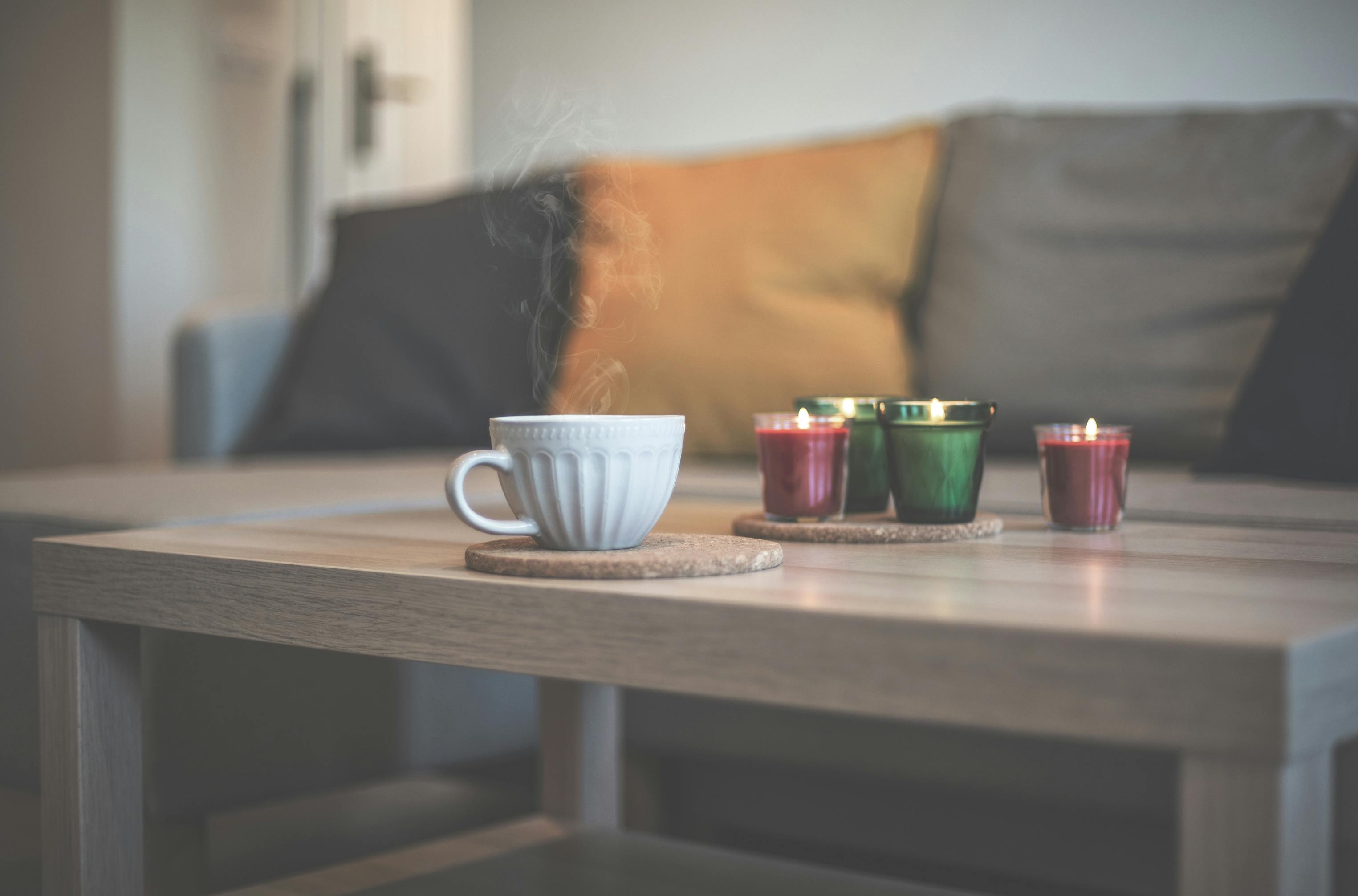
Every home has a smell. The household that lives there cannot detect it, because the human nose adapts to a constant smell within minutes and stops registering it entirely. But every visitor smells it, within seconds of entering, and remembers it, often for years. The home you grew up in had a smell that you could not name while you lived there and can summon instantly, decades later, the moment something triggers it. The smell of a home is one of its most powerful features and one of the least consciously tended.
The smell is not, usually, a problem to be solved. Most homes smell fine, in the sense that they smell of nothing offensive. But fine is not the same as good, and good is not the same as intentional. The household that has thought about its home's smell, even a little, lives in a home that greets its residents and its guests with something more than the absence of bad odour. It greets them with a particular, recognisable, welcoming presence that the nose registers before the eyes have taken in the room.
What a home's smell is made of
The smell of a home is a composite, built from many sources, layered over time.
The cooking is the largest contributor in most Indian homes. The tadka, the masalas, the daily frying, the specific spices a household uses, all leave a residue in the air, the curtains, the upholstery. A home that cooks a lot of fish smells different from a home that is vegetarian. A home that uses a lot of garlic smells different from one that uses asafoetida. The cooking smell is, in some sense, the household's culinary autobiography, written into the air.
The cleaning is the second contributor. The phenyl used to mop the floors. The detergent in the laundry. The dish soap. The bathroom cleaner. These chemical smells, individually sharp, blend into a background note that most homes carry. The household that uses strongly perfumed cleaning products has a home that smells of them. The household that uses milder, less fragranced products has a home whose other smells come through more clearly.
The materials are the third. The wood of the furniture. The leather of the sofa. The paper of the books. The textiles. Old wood, in particular, has a smell that deepens over decades. The home full of old wooden furniture smells different from the home full of engineered wood and metal. This material smell is the slowest-changing layer, and often the most evocative.
The bodies are the fourth, and the one nobody mentions. Every household smells, faintly, of the people who live in it. Their skin, their hair, their particular biology. This is not unpleasant, in a clean home. It is simply part of why a home smells like its specific household, and why the home of a family you know well has a smell you would recognise blindfolded.
A home's smell is the household's signature, written in a medium the household itself cannot read. Only the visitor reads it, and the visitor reads it instantly.
What the smell reveals
A home's smell, to the attentive visitor, reveals a great deal. The home that smells faintly of damp is a home with a moisture problem the household has stopped noticing. The home that smells strongly of air freshener is, often, a home masking something. The home that smells of last night's cooking at four pm the next day is a home with a ventilation issue. The home that smells of cigarette smoke, of pets, of mildew in the bathroom, is announcing these things to every guest, while the household, nose-blind, believes the home smells of nothing.
This is worth a small honest exercise. The household cannot smell its own home, but it can approximate the experience. Leave the home for several hours. A long walk, an afternoon out. Return, and pay attention in the first ten seconds, before the nose re-adapts. Those ten seconds are the closest the household will get to smelling its home as a visitor smells it. What comes through, in those ten seconds, is the home's actual smell. Sometimes it is lovely. Sometimes it surfaces a problem the household had stopped registering years ago.
The art of tending it
Tending a home's smell is not about adding fragrance. The over-fragranced home, full of plug-in diffusers and synthetic room sprays, is not a well-tended home. It is a masked one. The art is subtler.
The first principle is ventilation. The single most effective thing a household can do for its smell is to air the home regularly. Open the windows for an hour each morning, before the heat. Let the cooking smells out after each meal. Run the exhaust fans. The well-ventilated home does not accumulate the stale composite that the sealed home does. Most of what reads as a bad home smell is simply old air that has not been replaced.
The second is cleaning the sources. The bin that smells. The drain that has developed a note. The fridge that needs clearing. The damp towel that lives on the bathroom hook. The shoe rack. These small sources, cleaned, remove most of what is unpleasant. The home that addresses its sources does not need to mask anything.
The third, optional, is the small deliberate scent. Not the synthetic air freshener. The real thing: fresh flowers in the entrance, that release a faint scent. A few sticks of good agarbatti in the evening. A bowl of citrus peel. A pot of something simmering on a Sunday. Coffee in the morning. These are scents that belong to the household's actual life, and they layer over the home's base smell to produce something warm and particular, rather than masking it with something generic.
The smell across the seasons
The Indian home does not smell the same across the year, and the household that pays attention can use the seasonal shifts rather than fight them. Each season brings its own challenge and its own opportunity.
Summer is the season of staleness. The home is sealed against the heat, the windows shut, the AC recirculating the same air. By the peak of summer, the home that is not deliberately aired develops a closed, slightly stuffy smell, the smell of air that has been breathed too many times. The correction is the early-morning and late-evening airing, in the cool hours, when the windows can be opened without letting the heat in. Twenty minutes of cross-ventilation, twice a day, keeps the summer home from going stale.
Monsoon is the season of damp. The humidity penetrates everything: the cupboards, the books, the upholstery, the corners that never quite dry. The home develops the characteristic monsoon smell, that faintly musty, earthy note that every Indian recognises. Some of this is unavoidable and even pleasant. But the household must guard against the tipping point where pleasant damp becomes mildew. The silica gel in the wardrobes, the fan run in closed rooms, the camphor in the cupboards, the vigilance about wet towels and damp corners, all hold the line. The monsoon home that smells of clean rain is lovely. The monsoon home that smells of mildew has crossed a line and needs intervention.
Winter, in the north, is the season when the home smells best. The air is dry, the windows can be open through the day, the cooking smells clear quickly, and the home holds the warm smells of the season: the citrus, the dry fruit, the slow-cooked food, the occasional wood smoke from outside. The winter home, well aired, is the year's most fragrant. The household that has its home in good order enters winter with a home that smells, for a few months, exactly as it should.
The home that smells of itself
The best-smelling homes do not smell of fragrance. They smell of themselves, at their best. The clean version of the household's actual life. The cooking, aired out but faintly present. The good wood. The books. The flowers in the hall. The faint agarbatti from the evening prayer. The coffee from the morning. These layer into a smell that is unmistakably this home, and that the household's friends and family come to associate with the warmth of being there.
This smell cannot be bought. It is the accumulated result of how the household lives, ventilated and cleaned and faintly scented with the real things of its life. It develops over years. It cannot be installed before a party. The home that has it has earned it, through the daily small attentions, and it is one of the most welcoming things a home can offer, registered by every guest before a word is spoken.
Pay attention, once, to the smell of your own home, in the first ten seconds after returning from a long absence. Then pay attention to the smell of the homes you love to visit. You will find, almost always, that the homes that feel most welcoming are the ones that smell, unmistakably and pleasantly, of themselves. This is not an accident. It is the quietest form of hospitality, and it begins the moment the door opens, long before the tea is poured.