Home Services Stories Plans Journal About Pinch Partnerships For Teams For Business Careers Patron Portal Life Complexity Quiz Book a Call
The Journal
All Editions
Postcards by Pinch

When the House Goes Quiet

On unstructured time, the discomfort of being alone with yourself, and what becomes possible if you resist the urge to fill it

When the House Goes Quiet

It Starts With the Departure

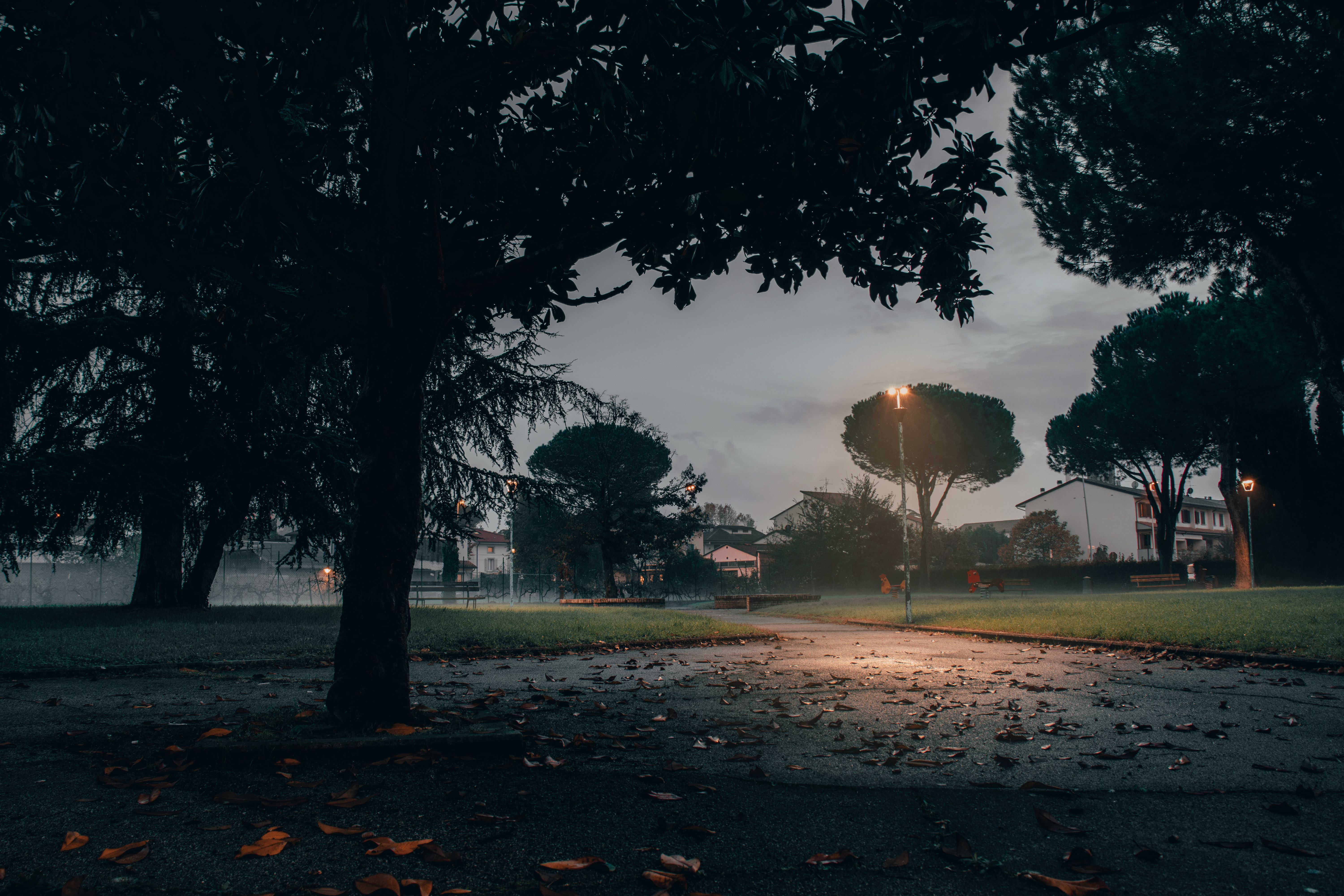
Sometime in the first two weeks of May, the house changes. The school bags disappear from the hallway. The breakfast chaos thins to one cup of coffee, drunk slowly, in quiet that feels slightly unreal. The family has left for the hills, or the in-laws, or somewhere with a pool and a slower pace. And you are here, in the city, in the heat, in a house that is suddenly and unusually empty.

This happens every year for a significant number of urban Indian households, particularly in the cities Pinch operates in. The summer migration is a fixture of a certain kind of family life. What is less examined is what it does to the person who stays behind.

The first day feels like a gift. No one needs anything from you. The evening is yours. You eat what you want, watch what you want, go to bed when you feel like it. By the second day, something subtler has begun. The phone, checked more frequently than usual, has nothing urgent on it. The evening, completely unscheduled, opens ahead of you like a room you are not sure how to furnish. By the third day, if you have not filled the calendar aggressively with dinners and plans and work that spills into the evening hours, you are alone with something that most people spend considerable energy avoiding.

Yourself. Unperformed. With nowhere to be.

The Impulse to Fill

The almost universal response to unstructured time is to restructure it as quickly as possible. This is not laziness or a failure of imagination. It is a deeply rational response to something that feels genuinely uncomfortable.

Psychologists call it the default mode problem. The human mind, left without external demands, does not relax into pleasant blankness. It activates. It replays, rehearses, anticipates, and ruminates. For people accustomed to the forward momentum of a full life, this internal activation is not restful. It surfaces things that the busyness was, among other functions, keeping at a comfortable distance. An unresolved tension in a relationship. A professional direction that no longer feels entirely right. A habit of living that has accumulated without ever quite being chosen.

None of this is dangerous. But it is uncomfortable enough that the instinct is to reach for something that makes it stop: the next series, the dinner plans, the work email that did not strictly need a response tonight. The digital environment is extraordinarily well-designed to assist with this. There is always something available to consume, and consumption, in the short term, is a remarkably effective substitute for presence.

The cost is specific. Unstructured time, genuinely inhabited rather than filled, is one of the rarest and most valuable conditions available to a person. It is when the mind does its most important background work: consolidating, integrating, generating the kind of slow insight that never arrives during a meeting or a commute. The people who do their best thinking in the shower, on a long walk, or staring at nothing in particular are not being unproductive. They are doing something that the structured hours of the day do not permit.

What the Quiet Surfaces

There is a quality of self-knowledge that is only available in stillness. Not the performed self-knowledge of the therapy session or the journaling prompt, where there is always a slight audience effect, even if the audience is only yourself. The unwitnessed kind. The thought that arrives when no one is watching, including the version of yourself that is always managing how you are perceived.

The writer Marilynne Robinson has a phrase for this: "the mind's freedom to consider without agenda." It is an unusual freedom for people with full, driven lives, and it tends to be available only in the gaps. The long drive alone. The early morning before the household wakes. The empty house in May.

What surfaces in these moments is not always comfortable and is almost always useful. The professional dissatisfaction that has been framed as "just stress" begins to look more like information. The relationship that has been operating on autopilot reveals, in the silence, what it actually costs. The thing you have been meaning to start, or stop, or reconsider, reappears without the comfortable excuse of having no time to address it.

This is not a crisis. It is a conversation with yourself that has been waiting for a room quiet enough to have it in. May, for those who stay behind when the family leaves, offers that room. The question is whether you choose to sit in it or immediately redecorate.

The Case for Not Filling It

This is not a piece about meditation, or digital detox, or any of the other formalised responses to the overscheduled life. Those are fine, but they have their own structure, their own implicit performance. What is being suggested here is simpler and less prescribed.

Leave some of it empty. Not all of it. Not even most of it. Just enough that the quiet has room to do something.

One evening this week, do not make plans. Sit in the house. Notice what it feels like when there is nothing required of you. Notice what the mind reaches for and what it surfaces when the reaching does not immediately pay off. Cook something simple if you are hungry. Read if a book presents itself. Walk if the evening is cool enough. But resist the impulse to fill the time with something optimised, curated, or scheduled.

The discomfort that arises in the first twenty minutes is not a signal that something is wrong. It is a signal that something is working. The mind is doing what it does when you finally stop asking it to perform: it begins, slowly, to tell you things.

The empty house in May is not a problem to be solved. It is, if you are willing to receive it that way, one of the more generous things the year offers.



From Pinch
Passage: An Intellectual Expedition: By Invitation Only | Udaipur, Rajasthan passage.pinch.co.in
Passage: An Intellectual Expedition

We do not often use Postcards to speak about our own work. But Passage is different enough from what Pinch normally does that it warrants an introduction, and the people reading this newsletter are precisely the people it was designed for.

Passage is a by-invitation-only, three-day immersive programme held in Udaipur, Rajasthan. It is designed for senior business owners and C-suite executives who have already built something significant and are ready to rethink how they think.

It is not a conference. It is not a retreat. It is not a masterclass. These distinctions matter because the format, and the quality of what becomes possible within it, depends entirely on them. There are no keynote speakers, no panels, no networking cocktail hours. The cohort is small and personally vetted, because the quality of the room is itself part of what you are paying for. The conversations are candid because the participant list is private and the Chatham House Rule applies to everything spoken within the programme.

The Three Days

Day 1: Imagination. The programme opens with a private lakeside dinner and a single provocative question that frames everything that follows. The first day is spent exploring what endures, through the specific lens of Udaipur's 1,400-year history. The point is not nostalgia. It is perspective: the kind that is difficult to access when you are inside the speed of your own organisation and almost immediately available when you step outside it.

Day 2: Invention. Conversations with founders and institution builders, including a celebrated architect and a national policy architect, on the specific question of decision-making under constraint. Followed by a demanding working session designed to surface the strategic assumptions that are currently organising your decisions without your awareness. Most participants describe this as the hardest and most valuable afternoon of the programme.

Day 3: Institution. A private conversation inside the City Palace with a custodian of the Mewar dynasty: a family that has been building and sustaining an institution for longer than most nations have existed. The day closes with each participant presenting their Innovation Thesis to the cohort, a single clear articulation of the strategic insight or directional shift that the three days have produced.

Accommodation is at the Taj Lake Palace or Oberoi Udaivilas. All transport and venues are arranged privately.

What You Leave With

A one-page Innovation Thesis. A 90-day action plan with peer accountability built in. A sealed letter, written by the participant on the final morning, returned by post 90 days later. Lifetime access to a private fellowship network, including an annual summit and a quarterly intelligence digest.

How to Express Interest

The programme is invitation-only. If you are reading this and feel it is relevant to where you are in your thinking, or to someone you know, visit passage.pinch.co.in and submit a brief expression of interest. Requests are reviewed personally, and a private invitation is extended within five business days if there is a fit.

We built Passage because we kept meeting people who had everything in place except the space to think at the level their decisions required. This is our response to that.

Learn more →

Crane Drop Ultrasonic Cool Mist Humidifier
To Use
Crane Drop Ultrasonic Cool Mist Humidifier

There is a problem with Indian summers that almost nobody names directly. The heat outside is one thing. What the air conditioning does inside is another, and in some ways harder on the body.

Air conditioning removes moisture from the air as efficiently as it removes heat. A room cooled to twenty-two degrees by a split AC unit typically has a relative humidity of between twenty and thirty percent, which is drier than most deserts. Spend eight hours in that environment and the cumulative effect is not trivial: dehydrated nasal passages, skin that loses moisture faster than any topical product can replace, a dry throat that arrives by mid-morning and stays through the day, and a quality of fatigue by evening that is difficult to attribute to any single cause but that the body is accurately reporting.

A cool mist humidifier placed in the room where you spend the most time indoors addresses this directly. The Crane Drop has become something of a quiet standard in this category: compact enough to sit on a desk or bedside table, quiet enough to run through the night without disrupting sleep, and effective enough that the difference in the quality of the air is noticeable within twenty minutes of switching it on. It runs for approximately twenty-four hours on a single fill, requires no filters beyond occasional cleaning, and draws minimal power.

The kind of product that seems unnecessary until you try it, at which point it becomes difficult to understand how you managed without it.

Available on Amazon India. Search: Crane Drop Ultrasonic Humidifier.

Available on Amazon India →
To Drink
Aam Panna

This is not a product recommendation. It is a recipe, and a case for making it yourself.

Aam Panna is made from raw green mangoes, the ones that arrive at the market in the weeks before the fruit fully ripens and sweetens. It is tart, aromatic, and deeply cooling in the functional rather than merely sensory sense. It sits at the intersection of flavour and medicine so precisely that it is hard to tell where one ends and the other begins.

The preparation: take two to three raw green mangoes and roast them directly over a flame or under the grill until the skin chars and the flesh softens inside. Allow to cool, peel, and scoop out the pulp. Blend with cold water, black salt, roasted cumin powder, fresh pudina, and a small amount of jaggery or sugar to balance the tartness. Strain if you prefer it smooth. Serve chilled but not over-iced.

Raw mango is high in potassium and magnesium, both lost in significant quantities through perspiration in peak heat. The pectin in unripe mango supports digestive function, which the heat tends to compromise. Made in a larger batch and refrigerated, it keeps for four to five days. The raw green mangoes for this are at the market right now, for approximately two to three more weeks before the season turns. After that, the moment passes for another year.

Make it this weekend.

Aam Panna

The Empty Evening
To Experience
The Empty Evening

This connects directly to the feature this month, and it is the simplest possible recommendation: leave one evening this week entirely unplanned.

No dinner reservation. No series queued up. No plans made in advance to fill the hours between seven and ten. Just the evening, the house, and whatever presents itself when nothing is required of you.

This will feel, for the first twenty minutes, like a mistake. Persist past that. What the unstructured evening offers, to the person willing to sit in it, is a quality of presence and self-knowledge that the scheduled life systematically prevents. You will think things you have not had time to think. You will notice things about your own state that the busyness has been obscuring. You may find that you are more tired than you knew, or more restless, or more content. All of it is information.

The summer, with its slower social calendar and emptier houses, offers more of these evenings than any other time of year. They are worth receiving rather than filling.

No booking required.

To Read
The Remains of the Day by Kazuo Ishiguro

Ishiguro's narrator, Stevens, is a butler of exceptional professional dedication who has spent his career in service to an English lord, and who takes a solitary motor journey across England late in his life. The novel is, on its surface, quiet to the point of appearing slight. What it is actually doing, beneath the surface of Stevens's careful, constrained prose, is one of the most devastating examinations of self-deception in the English literary canon.

The specific self-deception Ishiguro is interested in is this: the way intelligent, capable people can spend years, even entire careers, in service to the wrong things, without ever quite allowing themselves to see it clearly. Stevens has sacrificed almost everything for an idea of professional excellence and institutional loyalty. The novel asks, at its close, whether the sacrifice was worth it, and does not permit an easy answer.

This is the right book for a month about what the quiet reveals. Stevens's entire journey is, in essence, an encounter with what he has been not looking at. Read slowly. It rewards the pace.

Ishiguro was awarded the Nobel Prize in Literature in 2017. This novel won the Booker Prize in 1989 and has not dated by a sentence.

Available on Amazon India and leading bookstores →
The Remains of the Day by Kazuo Ishiguro

The Single Question
A Quiet Practice For The Week Ahead

There is a practice that predates every productivity system, every strategic framework, every executive coaching methodology. It requires no app, no accountability partner, no morning routine. It requires only a question, asked seriously, and enough honesty to sit with the answer.

The question is this: What am I not looking at?

Not what you have missed, which implies a failure already completed. What you are currently not looking at: the thing that is in the peripheral vision of your professional or personal situation but that the pace and pressure of daily life has made it convenient to leave there.

Every person reading this has at least one answer. Usually more.

The practice is not to immediately solve whatever the answer surfaces. It is simply to look at it directly, for long enough that it moves from the periphery to the centre of attention. To name it, at least to yourself. To give it the dignity of being seen.

The question is most useful asked at a moment of genuine quiet: early morning before the phone, or late evening after the stimulation of the day has settled. It takes five minutes. It rarely produces immediate resolution. What it produces, over time, is a quality of situational awareness that reactive, always-on operating modes systematically prevent.

Ask it this week. Ask it again next week. Notice what stays in the periphery across both occasions. That persistence is information.

The things we are not looking at rarely disappear on their own.


P
Pinch

Postcards by Pinch is published monthly for our community. It is meant to be read slowly, set aside, and returned to. We hope something in these pages finds you at the right moment.

Pinch: Make Time for More

www.pinch.co.in

More Postcards